How I matched dress shirts and trousers for a polished look
See how I compared six dress-shirt and trouser combinations, chose a polished professional pairing, and found simple styling mistakes that are easy to avoid.
Midnight navy with slate gray was my favorite pairing from six outfit references. White with navy looked more traditional for an important meeting. These are visual styling judgments; I did not buy, wear, or test the pictured garments.
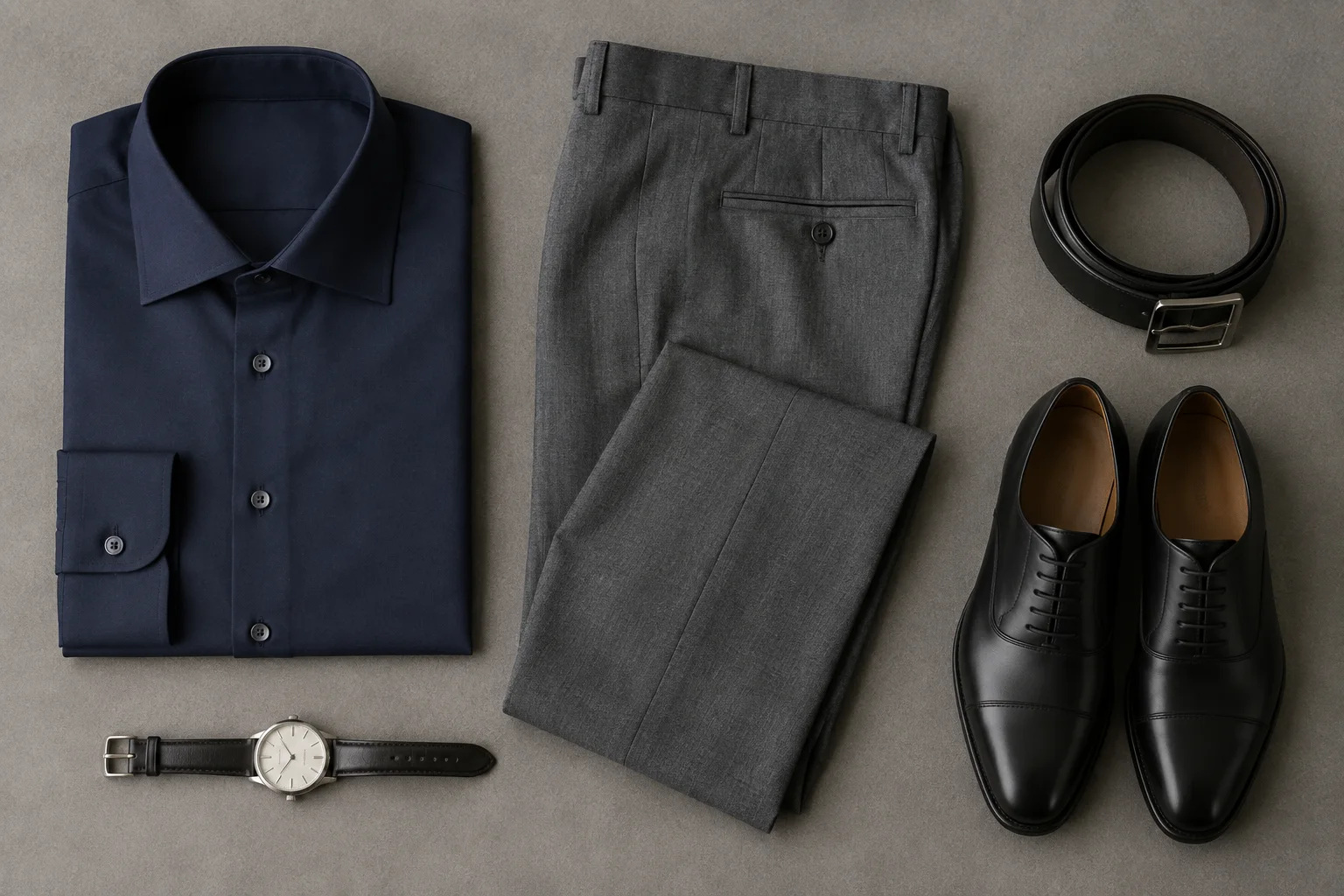
When I compared six men’s outfit references, a midnight-navy shirt with slate-gray trousers stood out as my strongest all-around professional pairing. The colors looked restrained, and the outfit did not depend on a loud pattern or several accessories.
This was a visual comparison. I did not buy or wear the clothing, confirm its brands or materials, or test its comfort. The ideas below are a starting point for choosing an outfit, followed by a real fit check and the requirements of the occasion.
The combinations I would use
| Setting | Shirt | Trousers | Why I liked it |
|---|---|---|---|
| Important meeting | White | Navy | A traditional, clear contrast. |
| Polished business look | Midnight navy | Slate gray | My favorite restrained pairing. |
| Everyday office | Gray striped | Medium gray | A subtle pattern within a controlled palette. |
| Evening or business dinner | Light gray | Black | A sharper, darker base. |
| Smart casual | Gray striped | Taupe or brown | Warmer trousers made it look more relaxed. |
| Warm-weather office | Light blue | Beige | The lighter colors looked fresh and less heavy. |
These settings describe my impression of the references. A shirt and trousers alone will not meet every formal dress code. An employer or event may require a suit, jacket, tie, or other specific clothing.
Why navy and slate gray became my first choice
The dark shirt and lighter trousers gave the outfit a visible separation without a dramatic color clash. Dark brown or black leather accessories kept the attention on the whole outfit. For a more traditional meeting, I would switch to a white shirt and navy trousers.
Other combinations I noted as ideas included navy with off-white, olive with white, dusty pink with light gray, and cream with olive. I would try those in real lighting before deciding whether they fit the occasion.
How I would put the outfit together
- Start with the setting. Decide how formal the outfit needs to be before choosing colors. White and navy was my traditional meeting option; navy and slate gray was my less traditional business choice.
- Choose one main contrast. With a dark shirt, I would usually try lighter trousers. With two gray pieces, a difference in shade or a subtle stripe helps keep the outfit from blending into one block.
- Check the fit while moving. Sit, reach, and walk. Pulling buttons, strained fabric, and restricted movement would send me back to a different size or cut. “Tailored” should not mean skin-tight.
- Tuck and straighten the shirt. Smooth excess fabric and check the placket, waistband, and belt. A neat tuck made the references look more intentional.
- Coordinate the belt and shoes. I would keep them in a similar color family, such as black with black or dark brown with dark brown. An exact shade match is less important to me than a coherent overall look.
- Keep accessories restrained. A simple silver-tone watch suited the examples. I would add one quiet detail before adding several competing ones.
- Check the neckline and dress code. A deeply open shirt with an exposed chain did not fit the professional result I wanted. How high to button the shirt depends on the setting and whether a tie is required.
When the outfit feels unfinished
| If it feels… | Try… |
|---|---|
| Too casual | A neater tuck, less open neckline, and fewer visible accessories. |
| Too dark | Lighter neutral trousers or a lighter shirt. |
| Too plain | One subtle pattern or one restrained accessory. |
| Mismatched | Coordinating the belt and shoes and simplifying the palette. |
| Too tight | A different size or cut that allows comfortable movement. |
One reference used a very open shirt and a visible chain. That might suit a different occasion, but it read more like evening styling than the business look I was trying to build.
I also would not let a good color pairing distract from fit. Bunching trousers, a pulling shirt, or accessories that dominate can make the outfit feel unfinished even when the colors work together.
What I would check before buying
The useful categories are a dress shirt, tailored trousers, an appropriate belt and shoes, and an optional simple watch. The reference images did not establish which exact products to buy.
- Compare actual garment measurements and the seller’s size chart.
- Read the material composition and care instructions.
- Check return and alteration options before committing.
- Judge the full outfit under daylight and the room lighting where it will be worn.
- Avoid assuming that appearance establishes comfort or durability.
Screen settings can change the apparent difference between navy, charcoal, black, taupe, and gray. A full-length mirror and a short movement check tell me more about the final outfit than the reference image alone.
Common questions
What color trousers go with a navy dress shirt?
Slate gray was my favorite option in this comparison. Off-white was another idea for a lighter look. I did not test either pairing in person.
Which combination looked most professional?
I preferred midnight navy and slate gray for a polished business look. White with navy looked more traditional for an important meeting.
Can a striped shirt work for the office?
The gray-striped shirt with medium-gray trousers looked office-appropriate to me. With taupe or brown trousers, the same idea appeared more relaxed. The actual dress code still comes first.
Should the belt exactly match the shoes?
My preference is coordination within the same general color family. That is a styling judgment from this comparison, not a universal rule.
Were any garments personally tested?
No. I compared visual references and selected combinations. I cannot make first-hand claims about any item’s fabric, sizing, comfort, or durability.
My final choice
I would start with midnight navy, slate gray, and simple dark accessories, then check the fit and formality in person. The exercise gave me a small set of combinations I could remember and adapt without turning getting dressed into an endless list of rules.
Editorial basis: the owner’s six-image styling comparison. The original images are not reproduced. All outfit assessments are subjective; no brand or product is presented as tested.
Adapted from the owner’s supplied notes, with personal identifiers omitted. Confirmed observations, suggested next steps, and manufacturer guidance are distinguished. Affiliate and advertising disclosure.